Khyber Medical University (KMU) conducted the KP MDCAT on 26 October 2025. It used 43 centres in eight districts. PMDC had moved the exam from 5 October because of floods. 39,986 candidates registered, and 38,447 took the exam.
These are 2025 results. Score comparisons are estimates, and some published totals differ. See the data notes below.
What the score ranges show
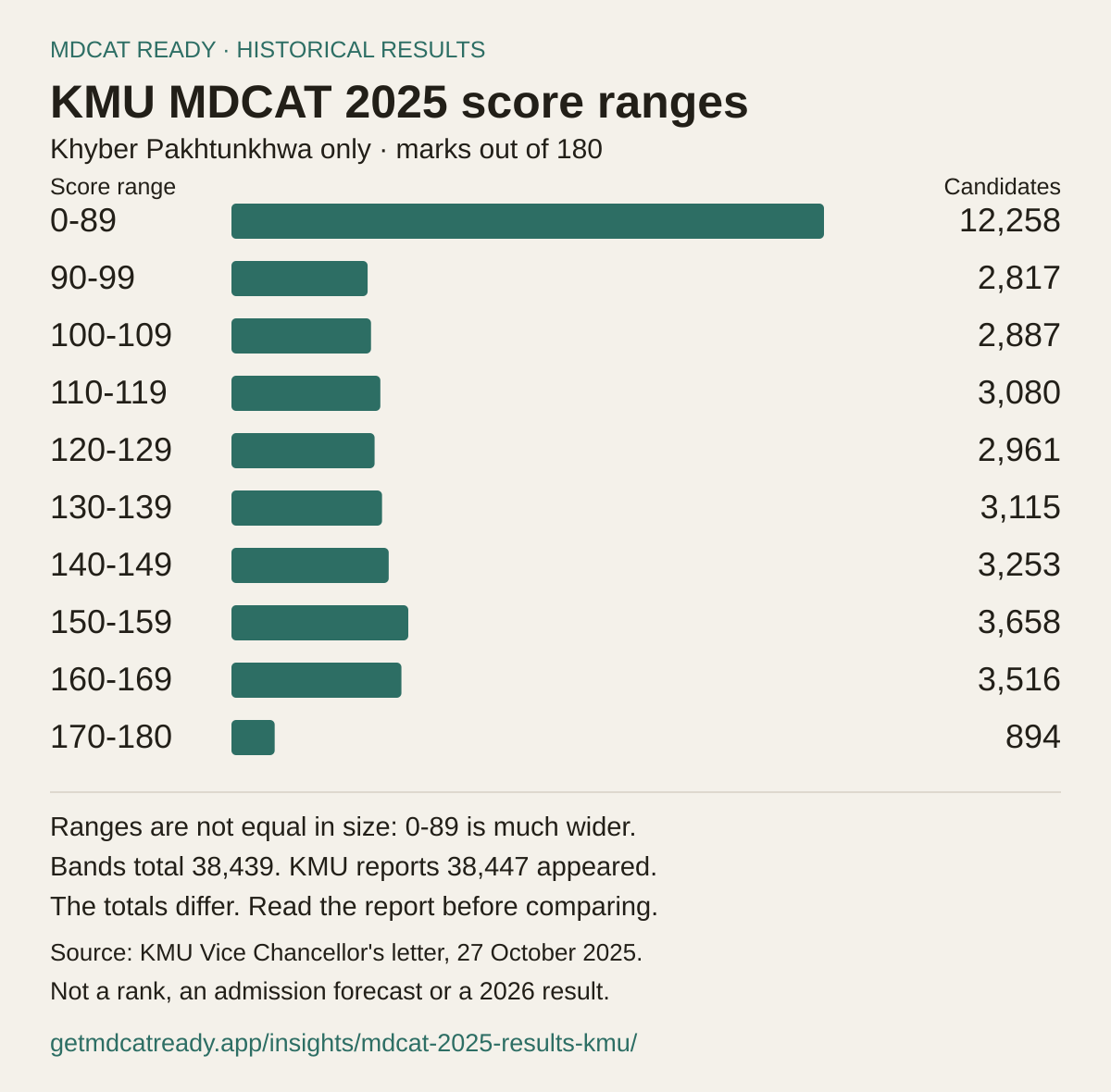
These published ranges contain 38,439 candidates. KMU reports 38,447 who appeared. The 0–89 range is much wider than the others. Bars show counts, not candidates per mark.
- 0–89 12,258 candidates
- 90–99 2,817 candidates
- 100–109 2,887 candidates
- 110–119 3,080 candidates
- 120–129 2,961 candidates
- 130–139 3,115 candidates
- 140–149 3,253 candidates
- 150–159 3,658 candidates
- 160–169 3,516 candidates
- 170–180 894 candidates
Source: KMU Vice Chancellor's letter, 27 October 2025. The totals do not fully match. See the limitations below. These are not exact ranks or forecasts for a new year.
Download the score-range totals as a CSV.
The MBBS pass mark is 55%, or 99 out of 180. But about 60% of candidates scored 100 or more. Passing alone does not show that you will receive a seat.
These comparisons help explain higher scores:
- 150 marks were around the top 21%.
- 160 marks were around the top 11%.
- 170 marks were around the top 2% — and no one reached 180 (the best in the province was 178).
These are rounded historical estimates, not exact ranks. They do not predict a new year’s results.
Of the students later called for a KP public college, about 70% scored 160 or more. See the full report. A score near 160 was therefore competitive in this group, but it did not guarantee a seat.
Where would your score have placed you?
Move the slider to a score, such as your latest mock score. It will show where that score would sit among the 38,447 KP candidates:
Estimates based on KP's 2025 results, not official ranks or admission predictions.
How the estimates are calculated
For scores below 170, marks are assumed to be spread evenly within each published 10-mark range. For 170 and above, the pattern in the call-up lists is scaled to KMU's published total. Below 90, the source gives one group: 12,258 students (31.88%).
Use your mock results to find weak topics to practise. Read how to divide your study time.
The last three years, side by side
The 2023 and 2024 papers had 200 marks. The 2025 paper had 180. We therefore show averages and top scores as a percentage of each paper:
Average score % of paper
Top score % of paper
Qualified for MBBS candidates
The reported average stayed between about 56% and 61% across all three years. The papers and candidate groups differed, so these averages cannot measure changes in exam difficulty.
Some KMU figures do not match. We copied the published figures, but found these problems:
- The percentages do not match the counts. KMU says 23,634 students qualified for MBBS and calls this 53.3%. But 23,634 is 61.5% of the 38,447 who appeared, and 59.1% of the 39,986 who registered. Neither equals 53.3%. We have not established why the figures differ.
- The score ranges contain 38,439 candidates. Adding the one reported unfair-means case gives 38,440, still seven below the stated 38,447 who appeared. We preserve the published figures and do not invent records to close the gap.
- KMU’s own 2023 result notice reported a top score of 192 and 34,852 students appearing. This summary says 193 and 34,713.
Use these figures for a broad comparison. Base application decisions on your official result, aggregate and the current admission requirements.
How KP fits into the national picture
Five universities ran MDCAT 2025 using the national PMDC format. Just over 140,000 students registered across the country — competing for about 22,000 MBBS and BDS seats (as national news reported):
These counts come from national news. Some are registrations and others are students who took the exam, so they are not directly comparable. Each university publishes results for its own region.